

Deuteronomy 30 - Choose Life

God is sovereign, but you have a choice.
SINCE WE LAST LEFT OFF... Moses, speaking for the LORD, prescribed cities of refuge for those who accidentally caused a death, commanded that justice must be upheld by reliable witnesses, and instructed Israel to show courage and trust in the LORD when going to war.
Moses also gave laws that protected the vulnerable and preserved order in Israel’s life—guidance for family relationships, property rights, marriage, and fairness in daily dealings—reminding the people that their conduct must reflect the holiness of the God who dwelt among them.
Deuteronomy 30:11–20 (NIV)
11 Now what I am commanding you today is not too difficult for you or beyond your reach. 12 It is not up in heaven, so that you have to ask, “Who will ascend into heaven to get it and proclaim it to us so we may obey it?” 13 Nor is it beyond the sea, so that you have to ask, “Who will cross the sea to get it and proclaim it to us so we may obey it?” 14 No, the word is very near you; it is in your mouth and in your heart so you may obey it.
15 See, I set before you today life and prosperity, death and destruction. 16 For I command you today to love the LORD your God, to walk in obedience to him, and to keep his commands, decrees and laws; then you will live and increase, and the LORD your God will bless you in the land you are entering to possess.
17 But if your heart turns away and you are not obedient, and if you are drawn away to bow down to other gods and worship them, 18 I declare to you this day that you will certainly be destroyed. You will not live long in the land you are crossing the Jordan to enter and possess.
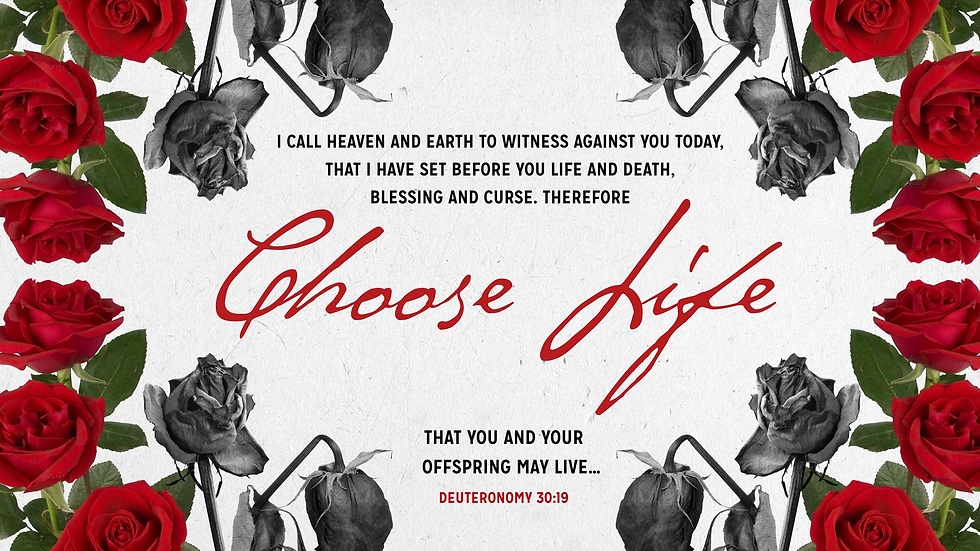
19 This day I call the heavens and the earth as witnesses against you that I have set before you life and death, blessings and curses. Now choose life, so that you and your children may live 20 and that you may love the LORD your God, listen to his voice, and hold fast to him. For the LORD is your life, and he will give you many years in the land he swore to give to your fathers, Abraham, Isaac and Jacob.
Heidelberg Catechism
Q&A 86
Q. We have been delivered
from our misery
by God’s grace alone through Christ
and not because we have earned it:
why then must we still do good?
A. To be sure, Christ has redeemed us by his blood.
But we do good because
Christ by his Spirit is also renewing us to be like himself,
so that in all our living
we may show that we are thankful to God
for all he has done for us,
and so that he may be praised through us.
And we do good
so that we may be assured of our faith by its fruits,
and so that by our godly living
our neighbors may be won over to Christ.
Summary
We need to be careful as Reformed Christians that in our appropriate promotion of salvation by grace alone that we don't fall into a couple of traps. Today's passage, which comes near the end of Deuteronomy as Moses gives his final instructions to God's people before he dies and they cross into the Promised Land, helps us spot these pitfalls and avoid them.
So many people erroneously think that they need to earn their salvation - that as they stand before the LORD in judgment, their actions will be weighed out on a divine scale, and if they've done more good than bad then God will accept them into heaven. So we're zealous to correctly point out the fallacy in their thinking and remind them that we can never, no matter how hard we try, keep God's Law good enough to outweigh our sins. Rather, we desperately need to rely on the finished work of Christ, whose perfect obedience is imputed (credited) to us.
But if we're not careful, this important truth that we can't perfectly keep God's law morphs into the error that we can't keep God's Law at all. A person quickly slides down this slippery slope by concluding that there's really no point in trying to follow God's Law, then, since Christ has already fulfilled it on our behalf. This error has a technical name: antinomianism, a word that simply means against (anti) Law (nomian).
So we need to hear what Moses reminded God's people thousands of years ago: that God's Law is not too difficult for you or beyond your reach. Certainly you can't keep it perfectly, and praise God, your salvation doesn't depend on doing so, but yes you can love the LORD your God, walk in obedience to him, and keep his commands, decrees and laws.
As the Catechism reminds, you must do good - that is, follow God's Law - to show that you are thankful to God, praise Him, be assured of your faith by its fruits, and so that by your godly living your neighbors may be won over to Christ.
Dig Deeper
The other trap we're prone to stumble into also begins with the best of intentions: emphasizing the total sovereignty of God over all things. The Catechism reminds us that God upholds and rules all things, so that nothing comes to us by chance, but from His fatherly hand. But if we push this doctrine too far, we become fatalists - people who think that this world is entirely preprogrammed and we're just drones doing what we've been preordained to do; our actions and choices don't really matter.
Once again, Moses, inspired by the Holy Spirit, directs us around this error. One of the key messages of the Pentateuch (first five books of the Bible) is that the LORD Almighty is faithful to His covenant, and that He sovereignly works out all things for the good of those who love Him and are called according to His purpose.
But God also sets a choice before His people: they can have life and prosperity, but if they choose poorly, they'll experience death and destruction. Moses explains that IF you keep his commands, decrees and laws; THEN you will live and increase, and the LORD your God will bless you. He goes on to make the choice even more stark: if your heart turns away and you are not obedient... you will certainly be destroyed. He sets before us life and death, blessings and curses, and implores us to choose life.
As a faithful follower of God's Word, you must live in tensegrity - that is, a life of integrity achieved by properly holding tension between seemingly conflicting doctrines. Yes, you are saved by grace and not by works. Yes, God sovereignly foreordains all that comes to pass. But at the same time, God expects you to keep His Law, and often (but not always) predicates material blessings upon your doing so.
ACKNOWLEDGE WHO GOD IS: Our Father, the LORD our God, who commands us to love and obey Him and to keep His commands;
ALIGN YOUR LIFE WITH GOD'S WILL: Pray that you will choose life, listen to His voice, and hold fast to Him;
ASK GOD FOR WHAT YOU NEED:


Some Christians think if i go to church I will be saved. But its also what you do during the week. Are you following God's law.
I like this word, new to me, tensegrity. Clearly, we've fallen out of it onto the antinomian side. The Church and western civilization have been poisoned by career feminists and their ideology. In one sense, we are chosing far less life and our demographic collapse is now upon us. We need babies, babies, babies and the covenant community's support of those young couples willing to choose life.